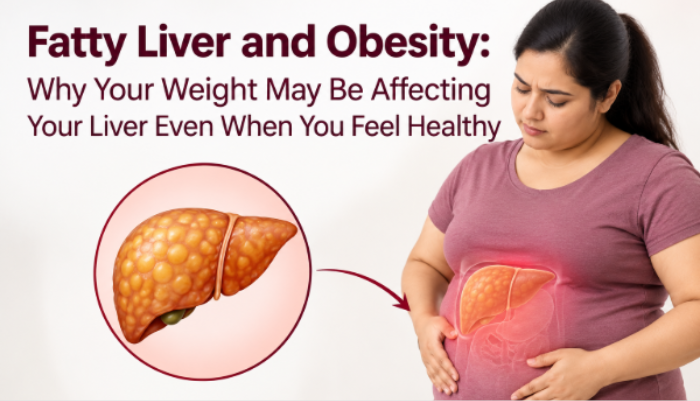
The Liver That Rarely Complains: Understanding the Connection Between Obesity and Fatty Liver Disease
You may not experience pain after meals. Your energy levels may seem normal. You may have no obvious digestive complaints. Yet, excess fat can accumulate inside your liver without producing noticeable symptoms in the early stages.
This is one reason fatty liver disease deserves attention in people living with overweight or obesity.
The liver performs essential functions, including processing nutrients, regulating energy storage, and helping the body metabolise fats. When excess fat accumulates in liver cells, it can interfere with normal liver function and, in some individuals, progress to inflammation, scarring and more serious liver disease.
The connection between obesity and fatty liver is not simply about body weight. It involves how the body stores fat, responds to insulin, processes nutrients and regulates metabolism.
Understanding this relationship can help people recognise potential health risks before symptoms develop.
What Is Fatty Liver Disease?
Fatty liver disease refers to excessive fat accumulation in the liver. When this occurs in association with metabolic risk factors, the condition is commonly called metabolic dysfunction-associated steatotic liver disease (MASLD). The older term non-alcoholic fatty liver disease (NAFLD) is still widely used.
MASLD is associated with metabolic factors such as excess body weight, insulin resistance, elevated blood glucose, abnormal cholesterol or triglyceride levels, and high blood pressure.
Not everyone with fatty liver develops serious liver damage. However, some people develop metabolic dysfunction-associated steatohepatitis (MASH), a condition involving liver inflammation and injury that may lead to fibrosis, or scarring.
In advanced cases, extensive scarring can progress to cirrhosis and increase the risk of liver-related complications.
The important distinction: Fat accumulation in the liver does not automatically mean cirrhosis or permanent liver damage. The extent of disease and the presence of inflammation or fibrosis need to be assessed separately.
Why Does Obesity Increase the Risk of Fatty Liver?
Think of the body's energy-storage system as a network. Fat is normally stored in adipose tissue, which helps regulate energy reserves. When this system becomes overloaded or functions abnormally, more fatty acids may reach the liver.
The liver may then accumulate fat faster than it can process or export it.
Several interconnected mechanisms contribute to this process.
1. Insulin resistance changes how the body handles fat
Insulin helps regulate blood glucose and influences how the body stores and uses energy. When cells become less responsive to insulin, the body may experience several metabolic changes.
Fat tissue can release more fatty acids into the bloodstream, while the liver may produce and store additional fat. These changes can contribute to hepatic steatosis, the medical term for fat accumulation in the liver.
Insulin resistance may occur alongside abdominal obesity, type 2 diabetes and elevated triglycerides.
2. Abdominal fat is metabolically active
Fat around the abdomen is not merely stored energy. Excess visceral fat, which accumulates around internal organs, is associated with changes in inflammatory signalling and metabolism.
These changes can increase the amount of fat delivered to the liver and contribute to insulin resistance.
This is why waist circumference and metabolic health can provide useful information alongside body weight. A person's overall weight alone does not tell the complete story.
3. Blood sugar and cholesterol abnormalities can coexist with fatty liver
The liver plays a central role in glucose and lipid metabolism. When metabolic regulation is impaired, fatty liver may occur alongside:
- Type 2 diabetes or prediabetes
- Elevated triglycerides
- Abnormal cholesterol levels
- High blood pressure
- Increased abdominal fat
These conditions can influence one another. Their coexistence is one reason fatty liver is considered part of a broader metabolic health problem rather than an isolated liver condition.
4. Diet, activity, sleep and genetics also matter
Frequent consumption of energy-dense foods, sugary drinks, low physical activity and inadequate sleep can contribute to metabolic dysfunction in susceptible individuals.
Genetic factors also influence how fat accumulates in the liver and how likely the condition is to progress.
Obesity is an important risk factor, but it is not the only one. Fatty liver can also occur in people who are not classified as obese.
Can You Have Fatty Liver Without Any Symptoms?
Yes. Early-stage fatty liver frequently causes no obvious symptoms.
Some people discover it during an abdominal ultrasound performed for another reason or during investigations for diabetes, abnormal cholesterol or elevated liver enzymes.
When symptoms do occur, they may include vague fatigue or discomfort in the upper-right part of the abdomen. These symptoms are not specific to fatty liver and can have other causes.
More advanced liver disease may produce signs such as abdominal swelling, leg swelling, jaundice or unusual bleeding. Such symptoms require prompt medical assessment.
The absence of symptoms should not be interpreted as proof that the liver is healthy. Equally, fatigue or abdominal discomfort alone cannot establish a diagnosis.
Can Normal Liver Blood Tests Rule Out Fatty Liver?
No. This is an important point for people who have obesity or metabolic risk factors.
Liver blood tests, including ALT and AST, can provide useful information about liver injury. However, some people with MASLD have results within the laboratory's reference range.
Normal results do not reliably exclude fat accumulation or clinically significant fibrosis.
Depending on the person's medical history and risk profile, assessment may include:
Medical history and examination: To understand metabolic risk factors, medications, alcohol exposure and other relevant health information.
Blood tests: To evaluate liver enzymes, glucose regulation, lipid levels and other potential causes of liver abnormalities.
Abdominal ultrasound: This may identify moderate or substantial liver fat, although it can miss milder steatosis and does not reliably determine the degree of fibrosis.
Liver fibrosis assessment: Tools such as FIB-4, which uses age and selected blood-test results, may help estimate the likelihood of advanced fibrosis. Elastography may be used to assess liver stiffness when appropriate.
No single test answers every question. Findings are interpreted together to determine whether additional evaluation is needed.
When Does Fatty Liver Become a More Serious Concern?
Fatty liver exists along a spectrum. Some people have fat accumulation without substantial liver injury, while others develop inflammation, fibrosis or advanced liver disease.
The main concern is not simply whether fat is present, but whether there is evidence of ongoing liver injury or scarring.
Factors that may increase concern include:
- Type 2 diabetes
- Persistent abnormalities in liver blood tests
- Significant abdominal obesity
- Multiple metabolic risk factors
- Evidence of liver fibrosis
- A history of progressive liver disease
Fibrosis is particularly important because advanced scarring is associated with a greater risk of liver-related complications.
The degree of risk varies between individuals. A fatty liver finding on an ultrasound should therefore be interpreted in the context of the person's overall metabolic and liver health.
How Is Obesity-Related Fatty Liver Managed?
Management focuses on improving metabolic health, addressing contributing factors and identifying people who may have progressive liver disease.
The appropriate approach depends on the degree of liver involvement, body weight, associated conditions and individual medical circumstances.
Nutrition: Look beyond a single food or diet trend
A sustainable eating pattern can help improve metabolic health. Depending on individual needs, this may involve appropriate portion sizes, more vegetables and fibre-rich foods, adequate protein, and fewer sugar-sweetened beverages and highly processed foods.
There is no single food that removes liver fat on its own. Likewise, extreme diets and unverified detox products are not substitutes for evidence-based care.
Physical activity: Benefits extend beyond the weighing scale
Regular physical activity can improve insulin sensitivity and metabolic health, even when changes in body weight are modest.
Activity should be appropriate to a person's physical capacity, existing medical conditions and mobility. Consistency is generally more useful than relying on short periods of intense exercise followed by inactivity.
Weight management: The pattern matters more than a quick result
For people with excess weight, sustained weight reduction can decrease liver fat and improve several metabolic risk factors. The degree of benefit varies, and the amount of weight reduction needed may depend on the stage of liver disease and other health conditions.
Repeated cycles of rapid weight loss and regain may make long-term management difficult. A structured approach is more appropriate than pursuing an arbitrary target on the weighing scale.
Diabetes, cholesterol and blood pressure need attention too
Fatty liver often occurs alongside other metabolic conditions. Managing blood glucose, lipid abnormalities and blood pressure is therefore an important part of overall care.
Medications may be appropriate for specific metabolic conditions or selected liver-disease indications. Their suitability depends on the individual clinical assessment, and not every person with fatty liver requires medication directed specifically at the liver.
Where does bariatric surgery fit into the picture?
Metabolic and bariatric surgery may be considered for eligible people with obesity when their overall clinical circumstances support this approach.
In appropriately selected patients, substantial and sustained weight reduction following surgery can improve metabolic health and may reduce liver fat and liver inflammation. The effect on established fibrosis varies, and surgery should not be presented as a guaranteed cure for liver disease.
The decision requires consideration of obesity severity, associated medical conditions, previous treatment, nutritional requirements, operative risks and long-term follow-up.
A person with fatty liver does not automatically need bariatric surgery. The presence of liver disease is one part of a wider assessment.
A Practical Way to Think About Your Liver Health
Instead of focusing on one test result or one number on the weighing scale, consider the broader pattern.
|
Health indicator |
What it can help reveal |
|
Waist circumference and body weight |
Information about body-fat distribution and obesity-related risk |
|
Blood glucose or HbA1c |
Evidence of impaired glucose regulation or diabetes |
|
Lipid profile |
Triglyceride and cholesterol abnormalities |
|
Liver blood tests |
Possible evidence of liver-cell injury, although normal results do not exclude disease |
|
Ultrasound or other imaging |
Evidence of liver fat and, depending on the test, other structural findings |
|
Fibrosis assessment |
Whether further evaluation for liver scarring may be needed |
These indicators are complementary, not interchangeable. For example, an ultrasound showing fatty liver does not establish the stage of fibrosis, and a normal ALT result does not exclude it.
The goal is to understand the complete clinical picture rather than draw conclusions from a single measurement.
Frequently Asked Questions
1. Does obesity always cause fatty liver?
No. Obesity increases the risk, but not everyone with obesity develops fatty liver. Genetics, insulin resistance, diet, physical activity, medications and other health factors can influence risk. Fatty liver can also occur in people without obesity.
2. Can fatty liver occur in people with a normal BMI?
Yes. Some individuals develop MASLD despite having a BMI within the conventional normal range. Abdominal fat distribution, insulin resistance, genetic susceptibility and other metabolic factors can contribute.
3. Can fatty liver be present when liver enzymes are normal?
Yes. ALT and AST can be within the laboratory reference range even when liver fat or significant fibrosis is present. Risk assessment may require additional information beyond routine liver blood tests.
4. Is fatty liver the same as liver cirrhosis?
No. Fatty liver describes fat accumulation, while cirrhosis is an advanced stage of liver scarring. Some people with fatty liver develop inflammation and fibrosis, but progression is not inevitable.
5. Can losing weight improve fatty liver?
Sustained weight reduction can decrease liver fat and improve metabolic health in many people with excess weight. The degree of improvement depends on several factors, including the severity of liver disease and whether fibrosis is present.
6. Does fatty liver require bariatric surgery?
No. Bariatric surgery is not necessary for every person with fatty liver. It may be an option for selected individuals who meet appropriate criteria for obesity surgery, based on a comprehensive assessment of their health and treatment needs.
7. Can exercise help fatty liver even if the scale changes very little?
Yes. Physical activity can improve insulin sensitivity and metabolic health independently of substantial weight loss. Changes in liver fat may occur even when the change on the weighing scale is limited.
8. Is an ultrasound enough to determine how serious fatty liver is?
Not always. Ultrasound can identify liver fat but has limitations in detecting mild steatosis and assessing fibrosis. Blood-based risk scores or elastography may be considered when further assessment is indicated.
9. Can fatty liver return after improvement?
Yes. Liver fat can accumulate again if contributing metabolic factors recur. Maintaining improvements in weight, physical activity, glucose regulation and other relevant health factors is important for long-term management.
10. Why should people with obesity and diabetes pay attention to liver health?
Obesity and type 2 diabetes are both associated with a higher risk of MASLD and progressive liver fibrosis. Assessing liver health can help identify people who may need closer monitoring or further evaluation.
The Takeaway: Liver Health Is Part of Metabolic Health
Fatty liver can develop quietly, without pain or obvious changes in day-to-day wellbeing. For people living with obesity, it is one of several metabolic health concerns worth understanding.
Normal liver enzymes do not always exclude disease, and the presence of liver fat does not automatically mean advanced damage. Appropriate assessment helps distinguish simple fat accumulation from conditions involving inflammation or fibrosis.
Long-term management involves more than reducing a number on the weighing scale. It includes understanding metabolic risk, addressing associated health conditions and choosing an approach that can be sustained over time.
About Dr. Sumit Talwar
Dr. Sumit Talwar is a surgeon specialising in metabolic and bariatric surgery, as well as robotic and laparoscopic surgery. His professional practice includes the surgical management of obesity and related metabolic conditions.
This article is intended for general health education. It does not establish a diagnosis or determine an individual's suitability for a particular treatment.